
Starlink for Education: Bridging the Global Digital Divide at Scale
Connectivity and technology has transformed learning into highly interactive, personalized experiences, with AI tools that extend far beyond traditional classroom resources. Yet, across much of the Global South, including the African continent and South Asia, where approximately 75% of the world's student population lives, internet access remains limited. This lack of connectivity prevents millions of students from fully participating in 21st-century education. The widening digital divide in school systems is not simply a technological gap; it is an opportunity gap. Without innovative, infrastructure-driven solutions, this divide will continue to grow, deepening educational inequities worldwide.
Grow X Education has firsthand experienced the power of connectivity through our work with education communities in Kenya. For the past two and a half years, Grow X Education has been working with the Centre for Mathematics, Science and Technology Education in Africa (CEMASTEA), a national institution under Kenya’s Ministry of Education, to support the integration of holistic education aligned with Kenya’s 2019 Competency-Based Curriculum (CBC), educational reform that promotes not only academic achievement but also social-emotional learning (SEL), critical thinking, and real-world application. In August 2025, Grow X Education visited Kenya to work with over 100 teachers, providing professional development on methods for integrating SEL into their STEM instruction [Read more about our initiative that was featured on CASEL’s website]. As part of this professional development, the Grow X SEL platform was introduced to be integrated into their teaching. However, once on the ground, we quickly realized that stable connectivity, critical for effective instruction and student learning, was largely nonexistent. At the same time, we witnessed a strong and consistent desire among students, teachers, and school leaders for access to digital learning and connection to the wider world. This contrast made one thing clear: modern education depends on reliable connectivity.
SpaceX, through its Starlink satellite network, is uniquely positioned to help reduce these geographic and technological barriers students face in the Global South. Starlink’s compact satellite internet terminals deliver high-speed internet via a low-Earth orbit satellite network, providing reliable access even in the most remote and underserved regions where traditional broadband infrastructure has failed to reach. Guided by their mission-driven commitment to expanding digital access across educational communities, SpaceX has been rapidly deploying Starlink systems in areas that have historically been left behind, helping to bridge the connectivity gap and expand new learning opportunities.
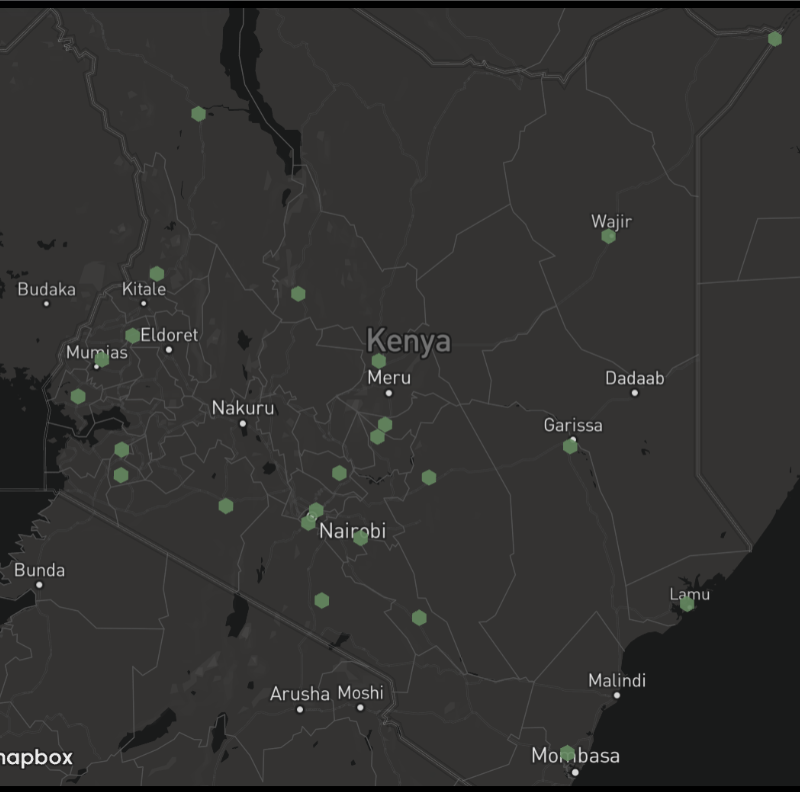
Kenyan counties where schools are located
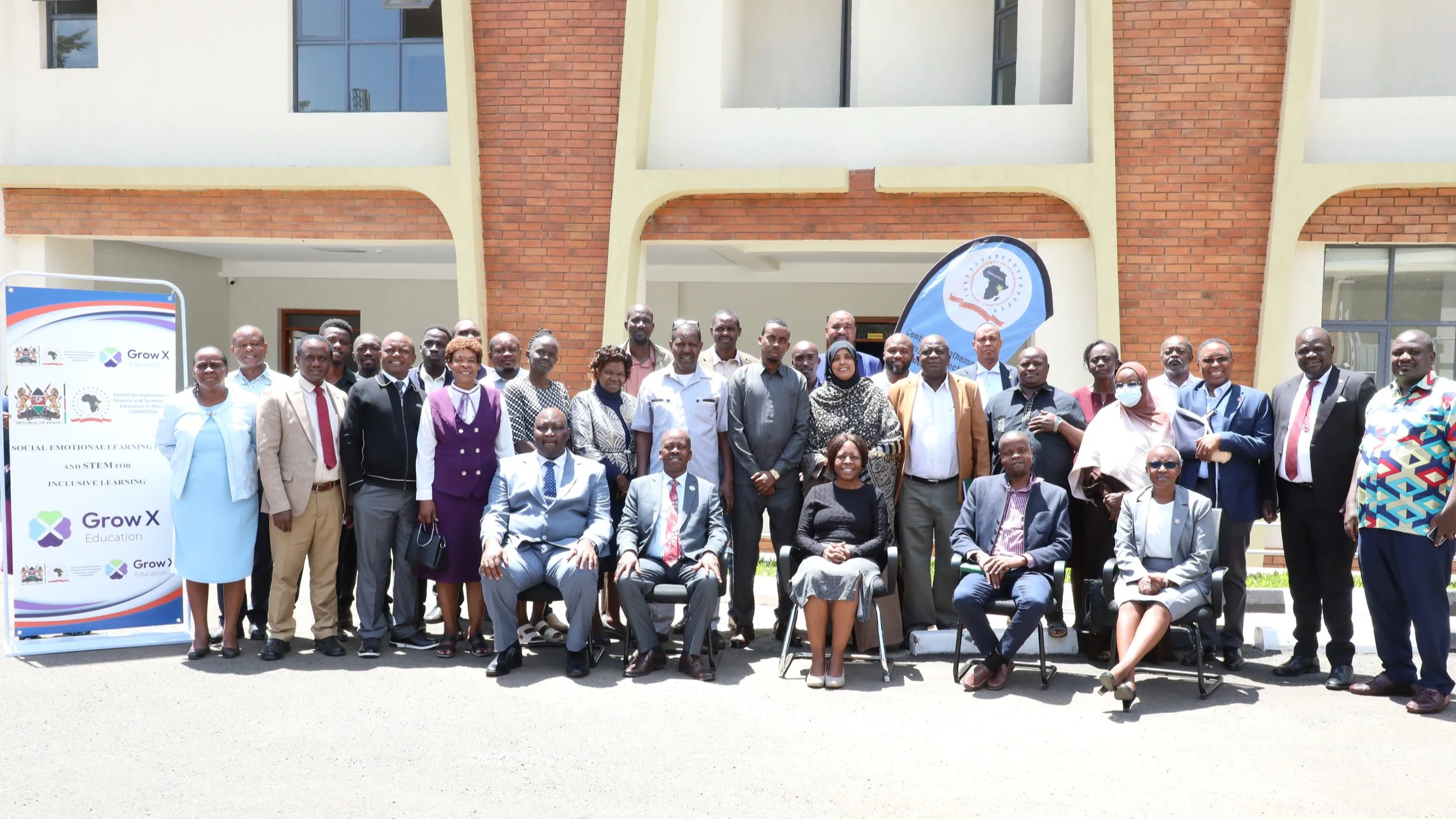
The Centre for Mathematics, Science and Technology Education in Africa (CEMASTEA) serves over 32,000 students and 1,000 teachers across Kenya
In January 2026, as Kenya began a new academic year, this commitment translated into measurable, nationwide impact across 30 schools. In close partnership with the Centre for Mathematics, Science and Technology Education in Africa (CEMASTEA), a national institution under Kenya’s Ministry of Education, 30 schools serving over 32,000 students and 1,000 teachers began the school year with fast, stable Wi-Fi for the first time in their history.
As illustrated in the active Starlink connectivity map shown in the dashboard, CEMASTEA worked tirelessly with school systems across the country to ensure equitable distribution across 30 distinct districts, rather than concentrating access in only a few regions.
One school leader journeyed from Bungoma County, located in western Kenya near the Uganda border, approximately 250 miles from Nairobi, a trip that takes about 9 hours by road. At the event, she reflected on how Starlink connectivity would fundamentally change teaching and learning in her school.
As she returned and activated her school’s Starlink unit, the impact was immediate. She reported enthusiasm among both teachers and students as access to digital platforms, online research materials, and global educational resources became available instantly.
In a message addressed to the Starlink team and the partners who made this initiation possible, she expressed her heartfelt gratitude and extended a sincere invitation to witness the impact of Starlink connectivity firsthand: “... How I pray that you will one day manage to pay a visit and see what Starlink connectivity has helped us.”
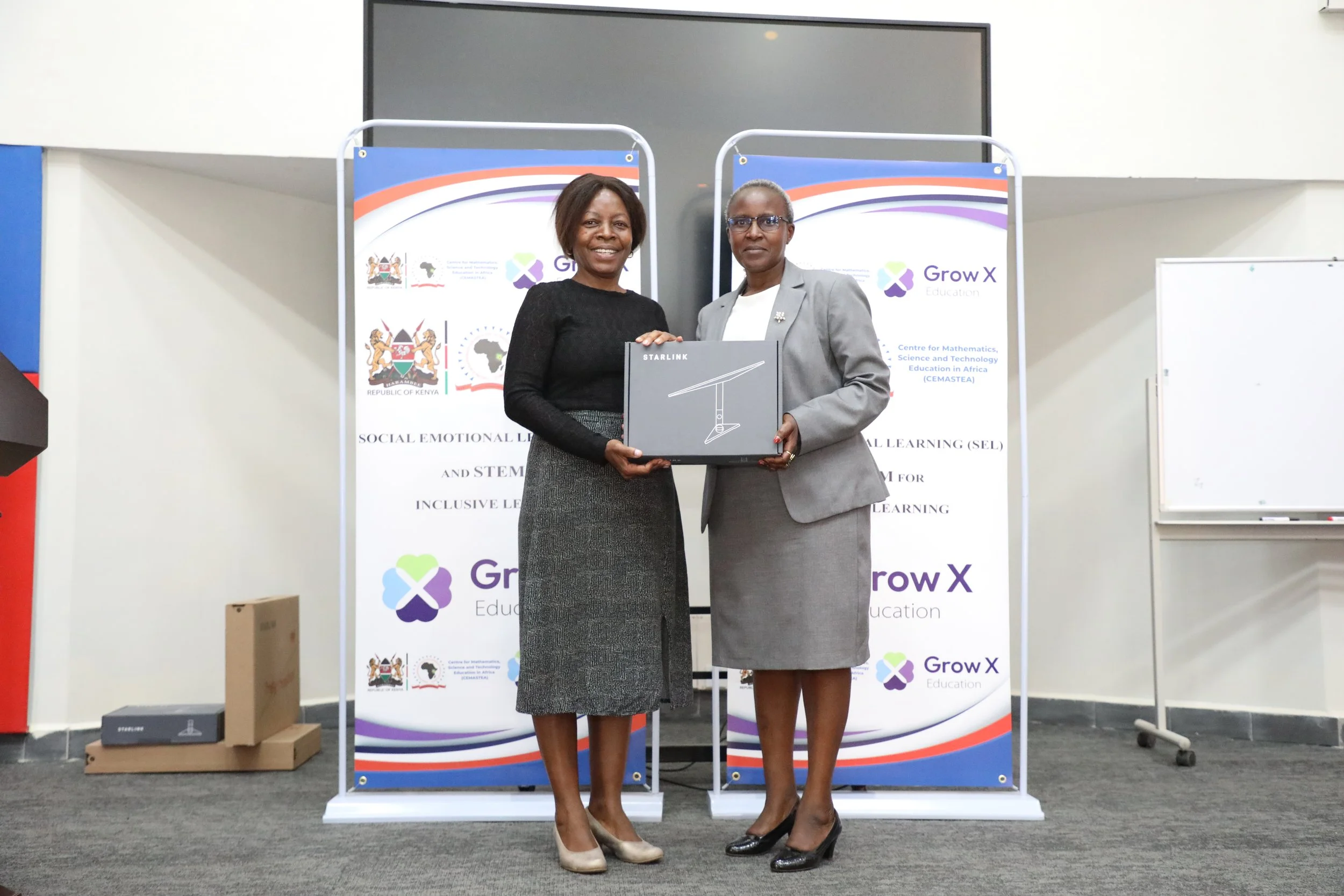
Starlink devices were issued to educators across 30 districts in Kenya
Her testimony reflects a broader national reality. As the Pre-Starlink Connectivity survey shows, 41% of schools identified a lack of, unreliable, and weak internet access as the most critical barrier to integrating technology into teaching and learning. Connectivity was not merely a technical inconvenience; it was the single greatest structural constraint faced by these schools in Kenya. Yet just one month later, the connectivity issues improved significantly, demonstrating how quickly reliable access can remove this foundational barrier.
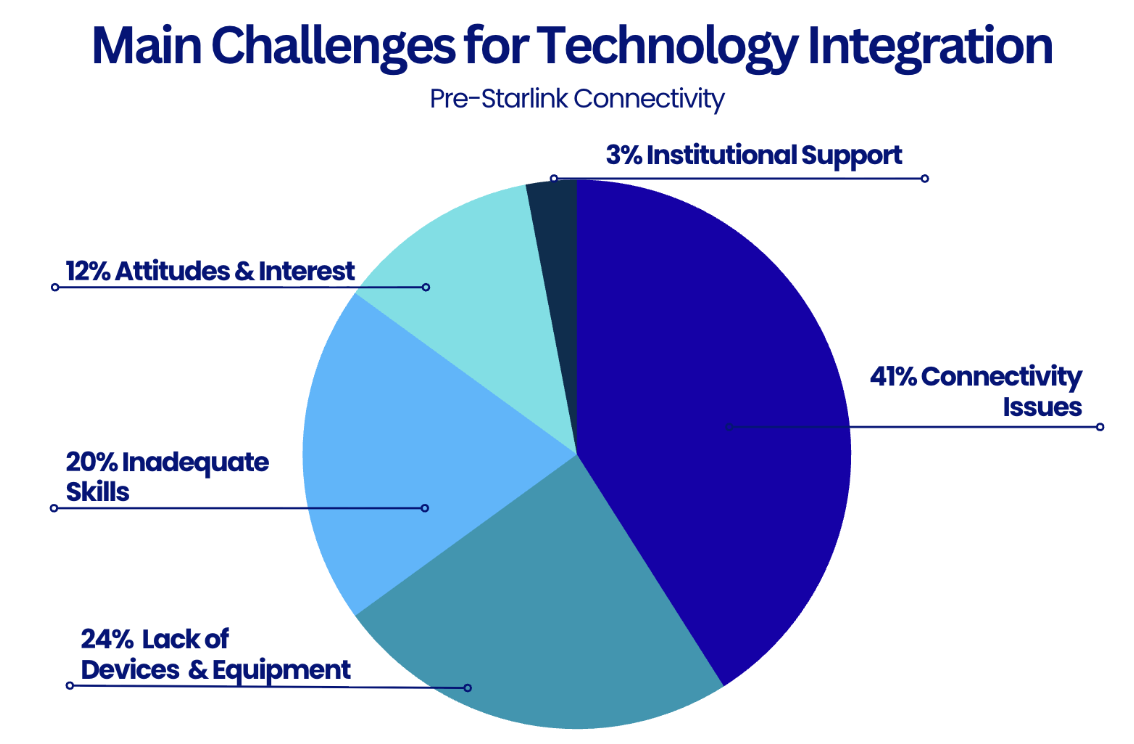
This example represented only a portion of the data being gathered to assess the impact of Starlink connectivity. To ensure a responsible, evidence-based scale, rigorous impact research is being conducted alongside implementation. Ongoing Surveys and field studies are examining how reliable connectivity influences instructional practices, student engagement, access to professional development, digital learning integration, and ultimately how these shifts translate into measurable improvements in student outcomes. Early findings from the first wave of research in Kenya suggest that, when deployed strategically, reliable connectivity can serve as a catalyst for systemic educational improvement at the national level (please see our preliminary results for more information).
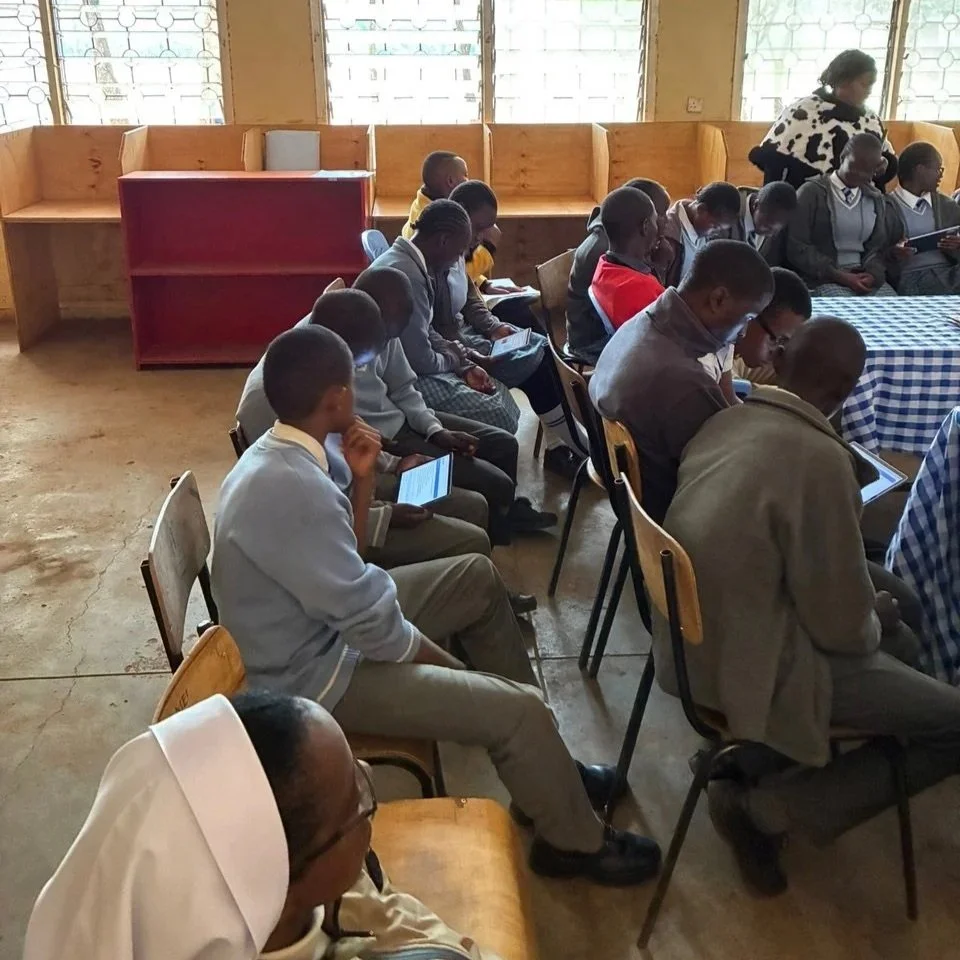
With Starlink, classrooms can better integrate digital resources, which increases learner engagement and participation.
With stable, high-speed connectivity now established, schools are beginning to realize meaningful instructional gains. Teachers are integrating digital resources more consistently across lesson preparation, delivery, assessment, and remediation. The proportion of teachers using digital tools regularly increased from 57% to 82%, alongside expanded use of digital assessments and data-informed practices.
These shifts are accompanied by higher learner engagement and participation, with 89% of students showing high or very high interest in ICT-integrated lessons, up from 57% pre-connectivity. Students are also demonstrating greater independence in accessing platforms, completing assignments, and collaborating digitally.
Furthermore, partners such as Grow X Education can now offer evidence-based, AI-driven learning platforms designed to strengthen students’ social and emotional competencies, skills foundational to academic achievement, resilience, and overall well-being, which align closely with Kenya’s 2019 Competency-Based Curriculum (CBC), an educational reform that prioritizes holistic development alongside academic performance. Plans are underway to expand longitudinal data collection across additional regions and cohorts to better understand sustained, holistic, and long-term impact.
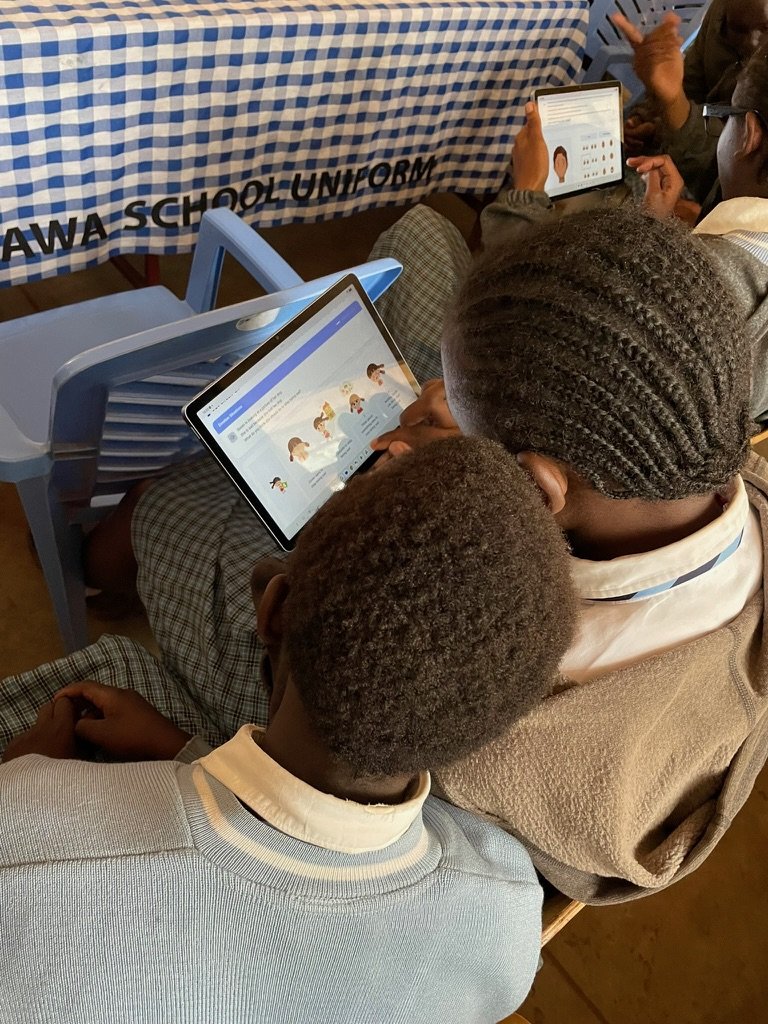
Students had the opportunity to try out activities on the Grow X SEL platform
With strong early evidence of impact in participating communities and sustained momentum from the initial pilot rollout, we are now well-positioned to expand support to additional school systems across Kenya. Scaling this initiative will not simply extend connectivity; it will accelerate broader, systemic-level changes, which will allow more equitable access to digital learning opportunities in Kenya.
Furthermore, similar evidence-based efforts can be implemented in other parts of the Global South, such as in South Asia. For example, we are currently working in direct collaboration with the University of the Philippines, the country’s largest teacher-training and educational research institution. By partnering with national academic leaders, connectivity initiatives can be implemented strategically, evaluated rigorously, and aligned with long-term educational development priorities unique to the educational context. This community-based integrated approach will strengthen sustainability and maximize system-wide impact.
Through inspiring partnerships grounded in equity and evidence, we move closer to creating classrooms without borders or boundaries, where geography no longer determines opportunity for education, and where every student can develop the skills, confidence, and empathy needed to shape a brighter future.